
Laboratory experiments show that an extract of the skin of muscadine grapes can inhibit growth of prostate cancer cells in the laboratory. Investigators from the National Cancer Institute (NCI), part of the National Institutes of Health, and their research partners also show that muscadine grape skin extract (MSKE) does not contain significant amounts of resveratrol, another grape skin component that has been widely studied and shown to be of potential benefit in preventing prostate cancer growth. The results appear in the September 1, 2007, issue of Cancer Research.
Using a series of human prostate cancer cells, representing different stages of prostate cancer progression, the researchers showed that MSKE significantly inhibits the growth of cancerous, but not normal, prostate cells, primarily by inducing a process called apoptosis, or programmed cell death. Programmed cell death is one of the mechanisms the body uses to rid itself of cells with unrepaired genetic damage before those cells can duplicate themselves. In contrast, resveratrol seems to act by blocking the cell cycle, a sequence of steps that a cell passes through when it grows and divides into two identical cells. Both mechanisms are used by the body to prevent the development of cancer.
According to Jeffrey E. Green, M.D., chief of the Transgenic Oncogenesis and Genomics Section in NCI's Center for Cancer Research (CCR), "These results show that MSKE may have potent antitumor activities in the lab that differ from the effects of resveratrol. Further studies of MSKE will be necessary to determine if this extract has potential as a chemopreventive or therapeutic agent."
The fact that all of the cells studied, which cover the different stages of prostate cancer tumor progression, responded to MSKE suggests that the active compounds in this extract may inhibit tumor development at very early stages.
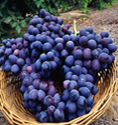
The muscadine grape (Vitis rotundifolia) is distinct from the more common red grapes used to produce red wines, a major source of resveratrol. The chemical constituents of muscadine grapes differ from most other grape varieties, as they are richer in chemicals called anthocyanins. Anthocyanins, which produce the red and purple colors of the grapes, have strong antioxidant activity and have shown several antitumor effects, including inhibition of DNA synthesis in breast cancer cells, of blood vessel growth in some tumors, and of enzymes involved in tumor spread. Muscadine grapes can be found growing wild from Delaware to the Gulf of Mexico and westward from Missouri to Texas.
While previous studies suggested that anthocyanins might suppress the cancer process, no rigorous study of the mechanisms underlying these effects has yet been done. Resveratrol, by contrast, has been widely examined. Although earlier studies showed that it can induce programmed cell death in prostate cancer cells, resveratrol did not significantly induce cell death in the prostate cell model system used for this muscadine study. The results of this study suggest that resveratrol may activate different antitumor mechanisms than MSKE.
Even though MSKE had significant inhibitory effects on the prostate cancer cells studied, it did not alter the growth rate of the normal human prostate cells in the lab, which served as controls. Ongoing studies of MSKE in animals will help to determine the underlying mechanisms of MSKE's inhibitory effects in prostate cancer cells. The researchers hope that the lab effects of MSKE will be reproducible in testing on cancerous and normal prostate cells in animals. Should MSKE move on to trials in humans, Green says that since "muscadine grape products, including grape juice and grape wine, have been used in human studies without reported side effects, they may be relatively safe for use in clinical trials."
Reference:
Inhibition of prostate cancer growth by muscadine grape skin extract and resveratrol through distinct mechanisms. Hudson TS, Hartle DK, Hursting SD, Nunez NP, Wang TTY, Young, HA, Arany P, and Green JE. Cancer Res. 2007; 67(17).