


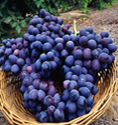
Grapes may aid a bunch of heart risk factors, animal study finds
Kara Gavin, University of Michigan Health System
Could eating grapes help fight high blood pressure related to a salty diet? And could grapes calm other factors that are also related to heart diseases such as heart failure? A new University of Michigan Cardiovascular Center study suggests so. The new study, published in the October issue of the Journal of Gerontology: Biological Sciences, gives tantalizing clues to the potential of grapes in reducing cardiovascular risk. The effect is thought to be due to the high level of phytochemicals – naturally occurring antioxidants – that grapes contain.
The study was performed in laboratory rats. The researchers noted that while these study results are extremely encouraging, more research needs to be done.
The researchers studied the effect of regular table grapes (a blend of green, red, and black grapes) that were mixed into the rat diet in a powdered form, as part of either a high- or low-salt diet. They performed many comparisons between the rats consuming the test diet and the control rats receiving no grape powder — including some that received a mild dose of a common blood-pressure drug. All the rats were from a research breed that develops high blood pressure when fed a salty diet.
In all, after 18 weeks, the rats that received the grape-enriched diet powder had lower blood pressure, better heart function, reduced inflammation throughout their bodies, and fewer signs of heart muscle damage than the rats that ate the same salty diet but didn't receive grapes. The rats that received the blood-pressure medicine, hydrazine, along with a salty diet also had lower blood pressure, but their hearts were not protected from damage as they were in the grape-fed group.
Says Mitchell Seymour, M.S., who led the research as part of his doctoral work in nutrition science at Michigan State University, "These findings support our theory that something within the grapes themselves has a direct impact on cardiovascular risk, beyond the simple blood pressure-lowering impact that we already know can come from a diet rich in fruits and vegetables." Seymour manages the U-M Cardioprotection Research Laboratory, which is headed by U-M heart surgeon Steven Bolling, M.D.
Bolling, who is a professor of cardiac surgery at the U-M Medical School, notes that the animals in the study were in a similar situation to millions of Americans, who have high blood pressure related to diet, and who develop heart failure over time because of prolonged hypertension.
"The inevitable downhill sequence to hypertension and heart failure was changed by the addition of grape powder to a high-salt diet," he says.
"Although there are many natural compounds in the grape powder itself that may have an effect, the things that we think are having an effect against the hypertension may be the flavanoids – either by direct antioxidant effects, by indirect effects on cell function, or both. These flavanoids are rich in all parts of the grape - skin, flesh and seed, all of which were in our powder." Bolling explains.
Such naturally occurring chemicals have already been shown in other research, including previous U-M studies, to reduce other potentially harmful molecular and cellular activity in the body.
Although the current study was supported in part by the California Table Grape Commission, which also supplied the grape powder, the authors note that the commission played no role in the study's design, conduct, analysis or the preparation of the journal article for publication. Seymour also receives funding from the National Heart, Lung and Blood Institute, part of the National Institutes of Health, through a National Research Service Award.
"Though it's true that your mom told you to eat all your fruits and your vegetables, and that we are learning a lot about what fruits, including grapes, can do in this particular model of hypertension and heart failure, we would not directly tell patients to throw all their pills away and just eat grapes," says Bolling.