

He that takes medicine and neglects diet, wastes the skills of the physician. ........Chinese proverb


Home
Print E-mail

Not All Antioxidants Are Created Equal

By Erin Peabody
June 12, 2007

Display of fresh blackberries, strawberries and blueberries. Link to photo information
Eating fruits, like those pictured above, could boost levels of antioxidants in our blood and lead to a lower risk of chronic degenerative disease.

 
They've been said to stall aging, ward off disease and wage internal war against the harmful free radicals that pummel our bodies every day. But just how well do antioxidants—those all-powerful compounds often found in richly colored fruits and vegetables, such as blueberries, blackberries and red cabbage—actually perform inside the human body?

Nutritionists with the Agricultural Research Service (ARS), the U.S. Department of Agriculture's chief scientific research agency, recently tackled this question. Their findings appear in the current issue of the Journal of the American College of Nutrition.

Led by Ronald Prior, an ARS chemist who works at the Arkansas Children's Nutrition Center in Little Rock, the researchers investigated how the consumption of different fruits affected volunteers' antioxidant status.

They did this by measuring the plasma (blood) antioxidant capacity (AOC) of volunteers who'd just ingested blueberries, cherries, dried plums, dried-plum juice, grapes, kiwis or strawberries.

The series of ARS studies confirmed what many antioxidant experts have long suspected: that the free-radical-busting compounds found in foods are quite complex, with some apparently being easier to absorb and utilize than others.

For instance, the researchers found that despite their high antioxidant content, plums did not raise plasma AOC levels in volunteers. According to Prior, one of the major phytochemicals in plums is chlorogenic acid, a compound not readily absorbed by humans.

As for the wild blueberry, a larger-than-average serving of this much-heralded antioxidant source was needed to boost plasma AOC levels. A noticeable climb in AOC wasn't detected until volunteers consumed at least a half-cup serving of the berries.

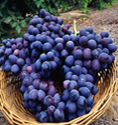
The volunteers' consumption of grapes and kiwifruit both led to noticeable spikes in plasma AOC. But it's not clear yet which compounds were responsible for the increased levels.

Alternatively, when volunteers were asked to consume a shake containing protein, carbohydrates and fat, with no antioxidants, their blood antioxidant levels dropped.

While additional research is needed to determine if elevated plasma AOC levels translate to a lower risk for chronic degenerative disease, the current ARS study is an important first step in efforts to establish recommendations for antioxidants in the diet.

 Source: USDA , ARS


Share this:
Digg!Reddit!Del.icio.us!Google!Live!StumbleUpon!Newsvine!Yahoo!
Last Updated ( Thursday, 20 September 2007 )
 

AUTOMATIC TRANSLATION

NUTRITION IN DEPTH

Nutritional therapies for mental disorders
Nutritional deficiencies associated with mental disorders and an outline on how dietary supplements can be used in the treatment of several disorders...
Read more...
-----------------------------------
Cancer and Nutrition: A review of the evidence for an anti-cancer diet
 
It has been estimated that 30–40 percent of all cancers can be prevented by lifestyle and dietary measures alone...
Read more...

-----------------------------------
Debate: "How low should LDL cholesterol be lowered?" Viewpoint: "It doesn't need to be very low"
 
We defend the viewpoint that not all high risk patients should have the objective to reach a low LDL concentration...
Read more...

-----------------------------------
The Case for Low Carbohydrate Diets in Diabetes Management
 
A low fat, high carbohydrate diet in combination with regular exercise is the traditional recommendation for treating diabetes. Compliance with these lifestyle modifications is less than satisfactory, however,...
Read more...
-----------------------------------

Exercise: Why nutrition is important in exercise and fitness regime
 
Appropriate nutrition is an essential prerequisite for effective improvement of athletic performance, conditioning, recovery from fatigue after exercise, and avoidance of injury...
Read more...
-----------------------------------

Google


About Us | Contact Us | Advertise with Us | Disclaimer | Privacy Policy | ©2006-08 DietaryFiberFood.com
We comply with the HONcode standard for trustworthy health
information:
verify here.